Read
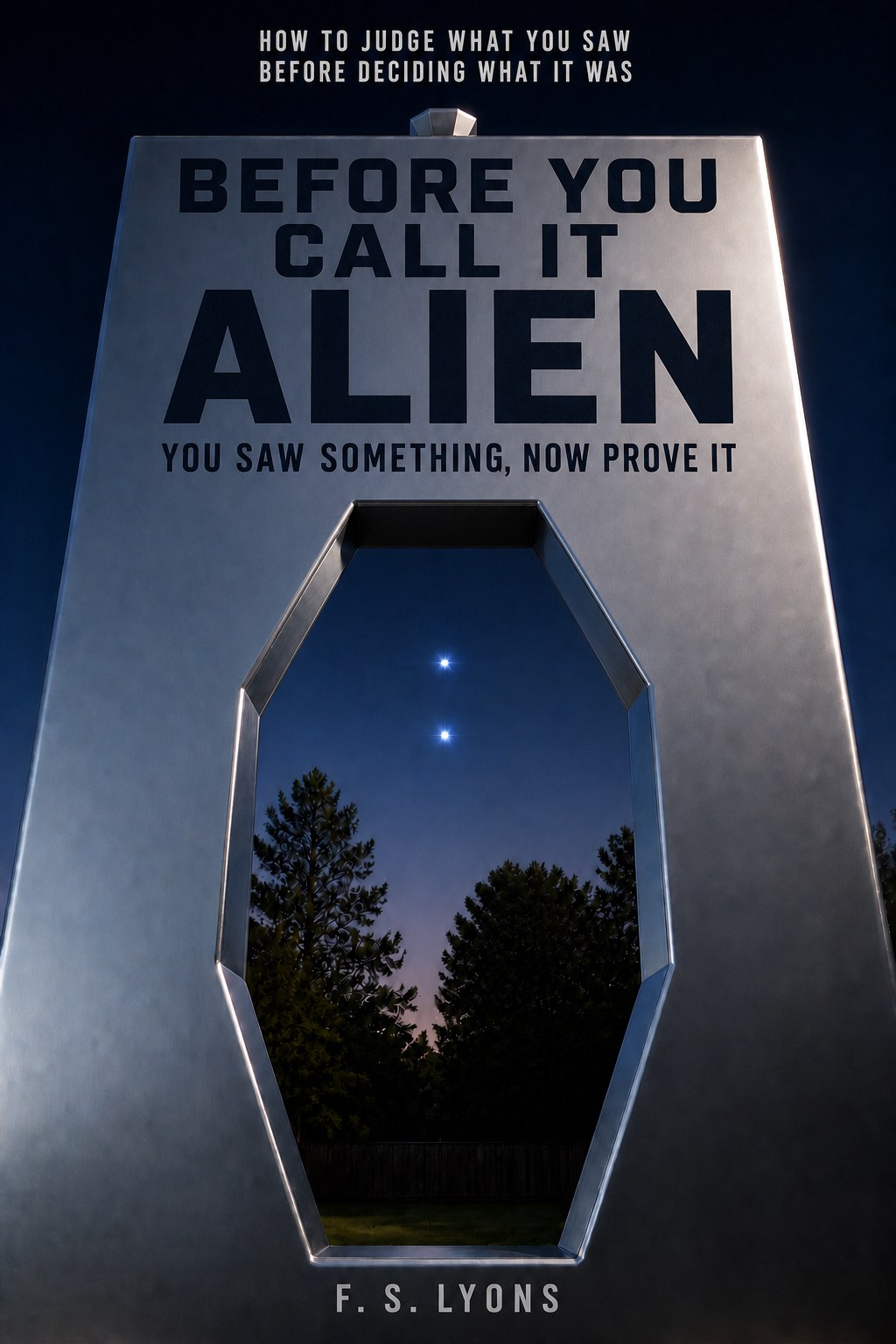
The Book
Learn a disciplined way to separate what you observed from what you inferred—and stop at the strongest conclusion the evidence supports.
Final manuscript preparationExplore this editionAn evidence-first guide for unusual sightings
A practical way to judge what you saw before deciding what it was—without ridicule, pressure, or a leap past the evidence.
One method. Four ways to use it.
Start with the book, put the framework into practice with the workbook, lead a group with the facilitator guide, or teach visually with the illustration manual.
Read
Learn a disciplined way to separate what you observed from what you inferred—and stop at the strongest conclusion the evidence supports.
Final manuscript preparationExplore this edition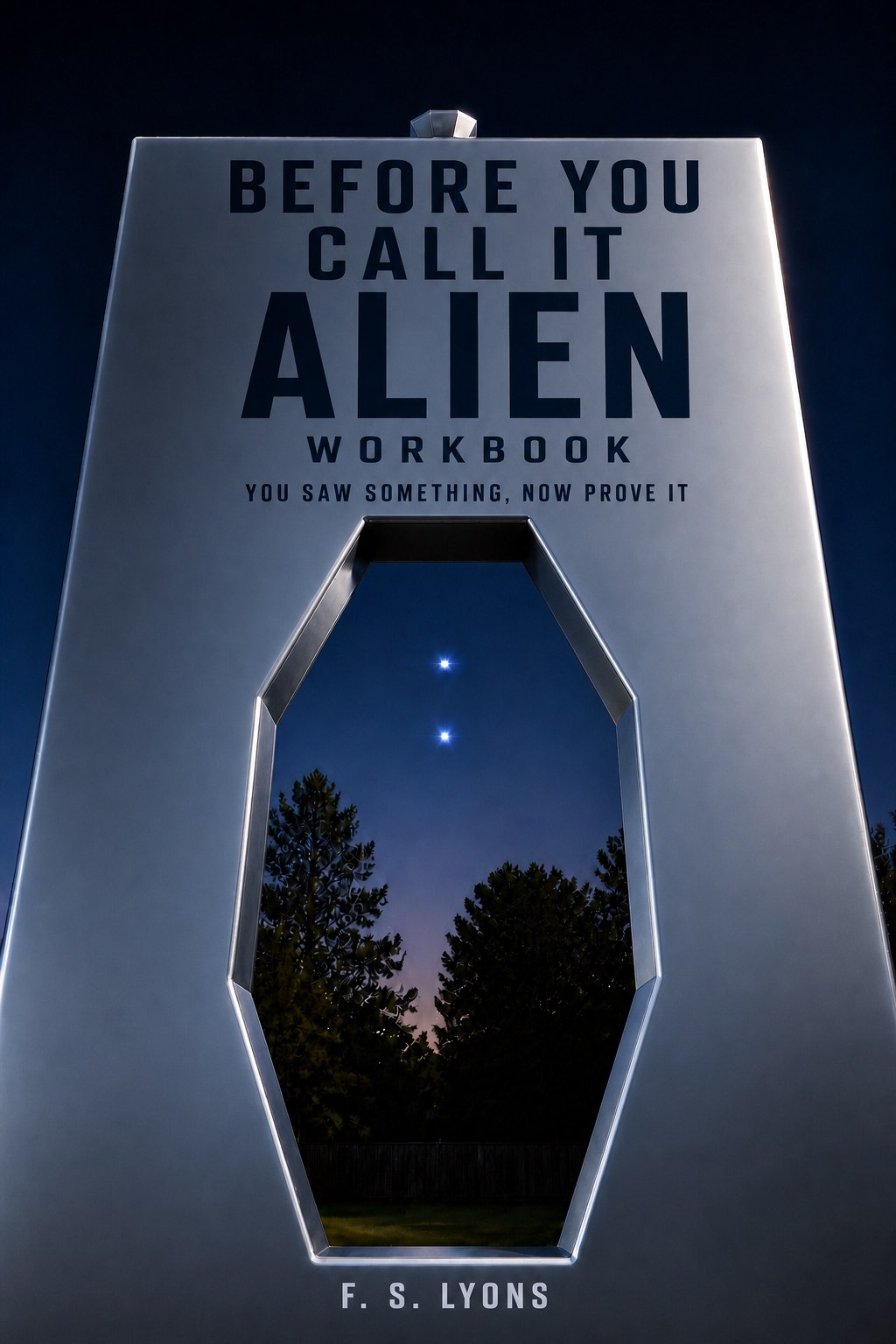
Apply
Document a sighting, test competing explanations, and work through the assessment method one careful step at a time.
Companion edition preparationExplore this edition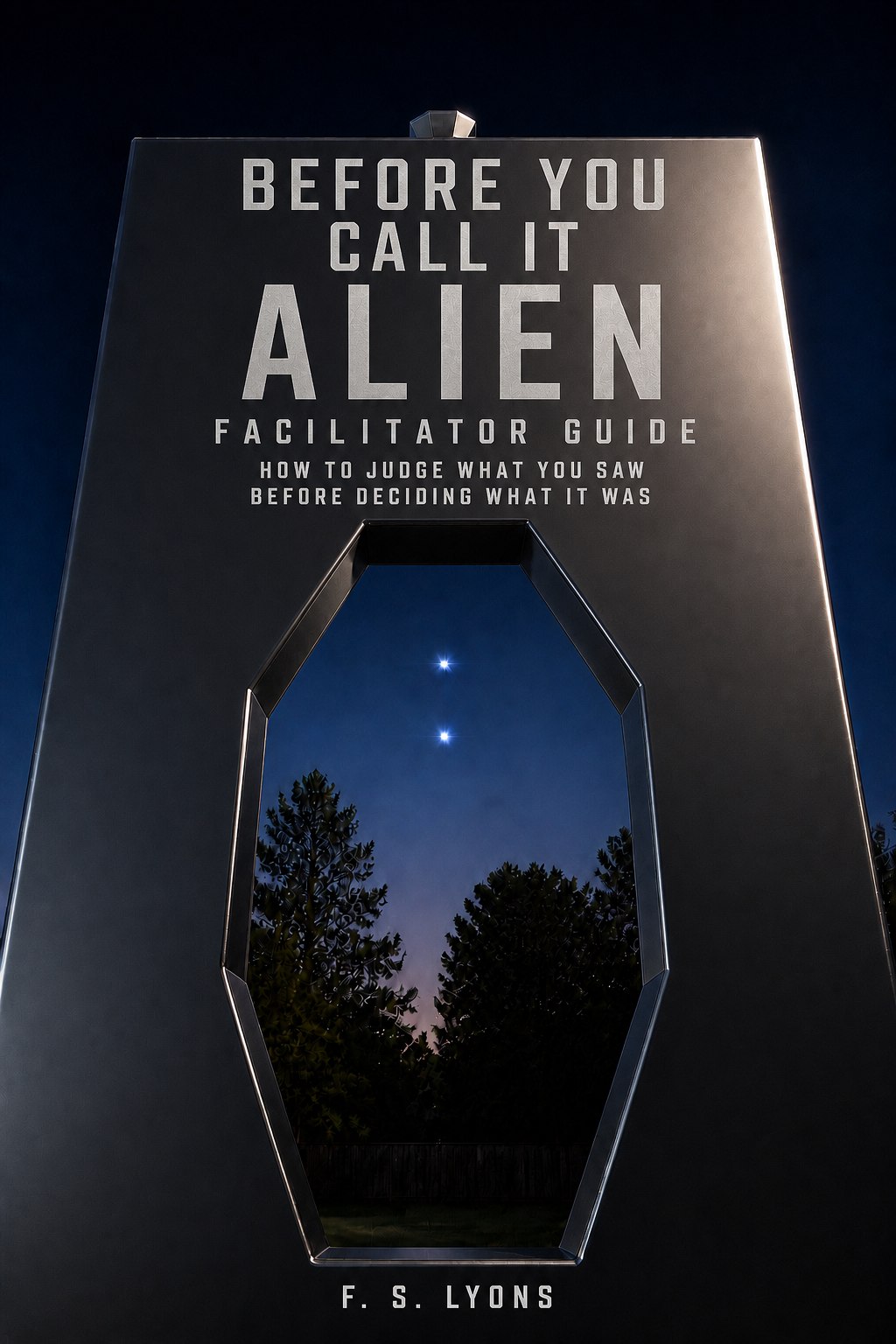
Guide
Lead thoughtful, respectful discussions without steering participants toward certainty the evidence cannot support.
Facilitator edition preparationExplore this edition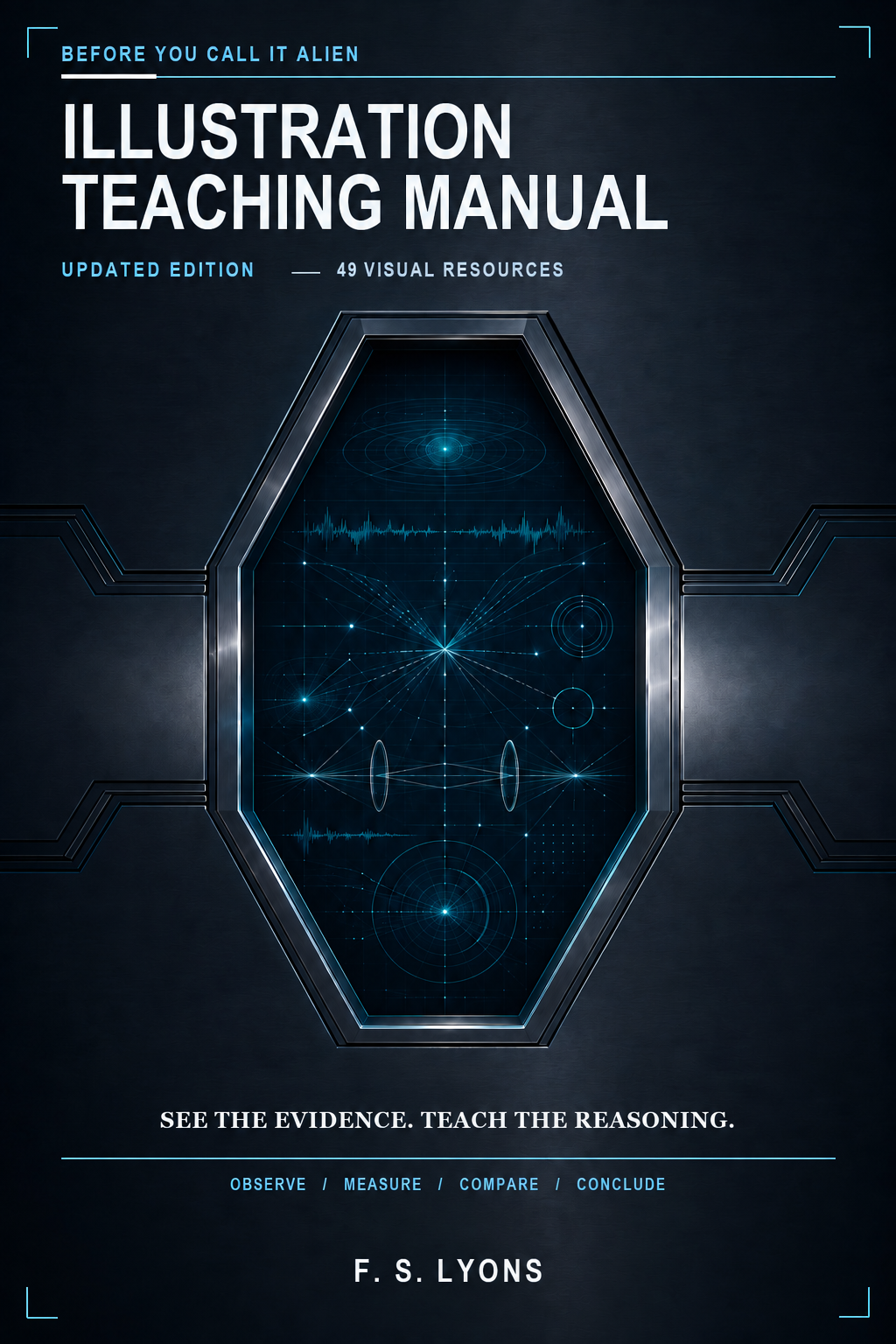
Teach
A curated visual teaching library for observation exercises, evidence-centered discussion, and clearer scientific reasoning.
Available now — free PDFExplore this editionThe evidence-first method
The framework is designed to slow down a conclusion just long enough to give the original experience—and the available evidence—a fair hearing.
Record the first account and protect original files before retelling, editing, or enhancing anything.
Keep direct observations apart from impressions, assumptions, labels, and later memories.
Compare ordinary and technical explanations, source quality, geometry, motion, and context.
State only the strongest conclusion the record can support—even when the honest answer is unknown.
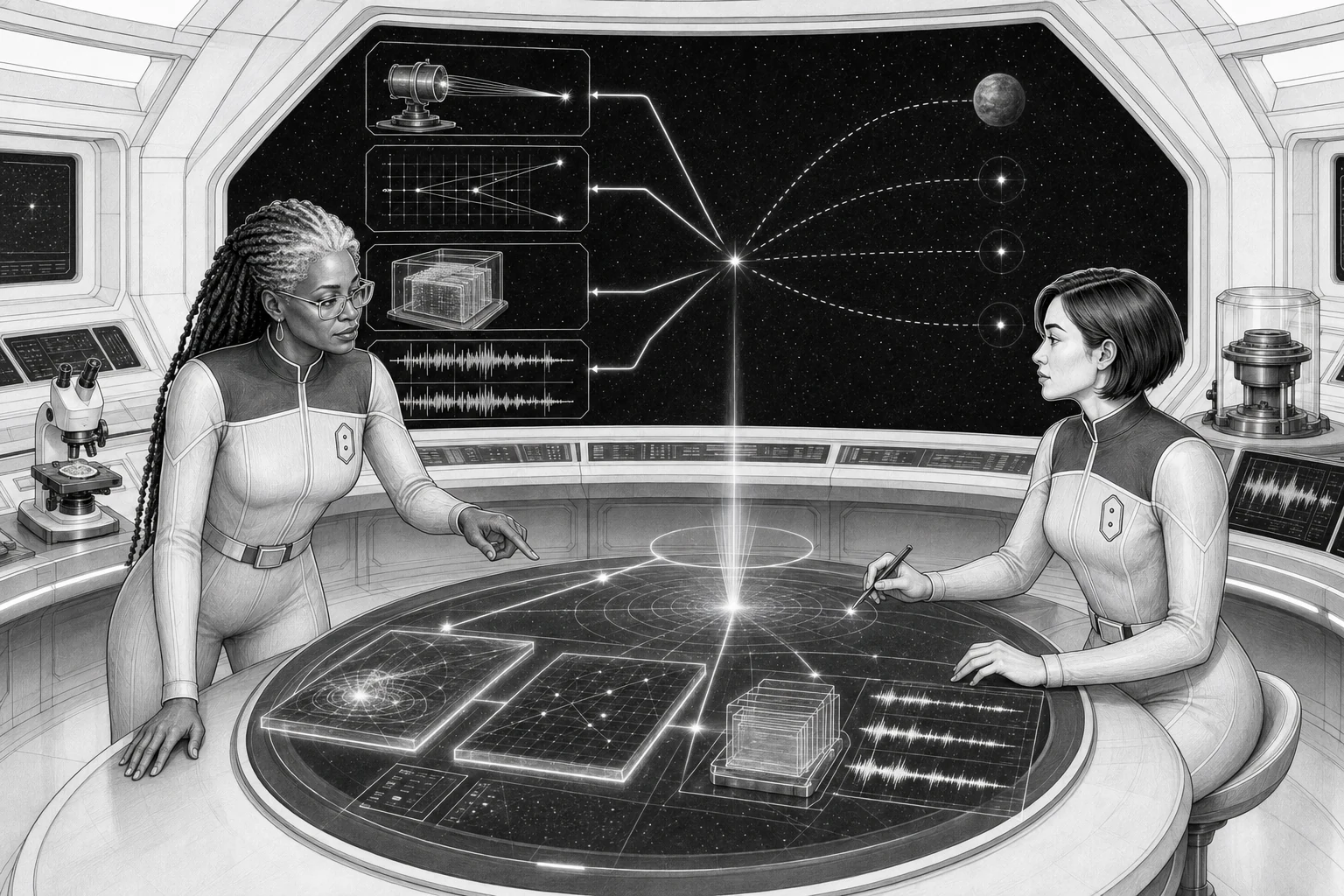
Optics, geometry, source preservation, and independent sensors can strengthen what is known. The final identity still has to earn its connection.
Designed for careful inquiry—not forced certainty.
The assessment is an author-developed reader aid. It is not a scientifically validated truth, origin, probability, or witness-certification test.Built for the questions people actually carry
Preserve the event, understand what the record can establish, and find a way to live with a conclusion that may remain open.
Learn how perception, cameras, motion, atmosphere, geometry, and source quality can change what a sighting appears to show.
Use a shared vocabulary, repeatable exercises, and boundaries that respect both the witness and the limits of the evidence.
“Curiosity is welcome.Every conclusion must earn its place.”
Purchase, support, and continued use
Begin with a guided reading path, use the five-minute field aid, and join the launch list while purchasing, group ordering, and fulfillment are prepared.
Print and ebook ordering links will appear here after the final editions are assigned to their sales channels.
Bundles, signed copies, and quantity ordering can be connected once the direct-sales and fulfillment partner is selected.
Help us find confusing language, difficult navigation, and places where the reader experience needs more support.
Publication updates
Receive the release announcement, confirmed edition details, and important companion resource updates. No purchase is required, and you can remove your address at any time.
Common questions
No. Unknown describes the limits of the available record. It is not evidence of a particular identity or origin.
No. The book explains the complete approach. The workbook provides a structured, reusable place to document and review individual cases.
It is designed for educators, reading groups, community discussions, and evidence-centered workshops—not only professional investigators.
No. It is an author-developed reader aid for organizing observations and questions. It does not calculate truth, origin, probability, or witness reliability.